Showing posts with label WebSDR. Show all posts

Friday, April 18, 2025

📡 RAF VOLMET on 5450 kHz: A QSL from the Skies

Weather for the Forces: Logging RAF Volmet

Shortwave listening can sometimes feel like eavesdropping on the pulse of the world—and once in a while, you catch something that’s not meant for the usual civilian audience. That’s exactly what happened on March 26, 2025, when I tuned into RAF VOLMET on 5450 kHz USB and logged one of their weather broadcasts.

For those unfamiliar, RAF VOLMET is a military weather information service operated by the UK Ministry of Defence. It transmits automated meteorological reports for Royal Air Force and allied aircraft flying across various regions. The voice you hear is synthesised, but the data it carries is essential: wind speed, cloud cover, visibility, temperatures, pressure levels—all tailored for pilots in the sky.

Reception Snapshot

  • Date: March 26, 2025
  • Time: 1940–1950 UTC
  • Frequency: 5450 kHz USB
  • Mode: Upper Sideband
  • SINPO: 45444
  • Location: Received online from Kolkata, India
  • Receiver: WebSDR Twente

At 1940 UTC, the familiar female synthesized voice came through clearly, reading out met reports for locations coded in ICAO-style identifiers (like Foxtrot Tango Tango Juliet or Sierra Uniform Mike Uniform). Around 1945 UTC, I caught a clean station ID: “This is Military I Volmet Information Broadcast”, and again at 1946 and 1949 UTC.

Reception was stable overall, with light fading and static, but no co-channel interference. The transmission was steady throughout the 10-minute logging window.

For those interested in listening to the reception, I've preserved a 3-minute audio snippet that captures the essence of this broadcast: http://sndup.net/zcdrw

Acknowledgement from the MOD

Following my report, I received an official confirmation and QSL letter from the UK Ministry of Defence. It acknowledged my reception of the 5450 kHz transmission from “Military 1,” making this one of those rare but satisfying logs that combines technical interest with a touch of official recognition.

A Brief History of RAF VOLMET

RAF VOLMET has long been a behind-the-scenes player in military aviation, offering continuous weather updates for in-flight operations. The service forms part of the UK’s broader military communications infrastructure and helps aircraft navigate safely in varied and often unpredictable weather conditions. You can learn more via the UK Ministry of Defence official site.

Final Thoughts

Catching a VOLMET transmission might not be the most dramatic DX log, but it’s deeply rewarding. It connects you to real-world operations happening in the skies above, quietly supporting aviation safety. If you’re scanning the bands and hear a robotic weather briefing, don’t skip it—you might just be tuned into RAF VOLMET.

73s and happy monitoring!

Sunday, April 2, 2023

Sunlite Radio E-QSL Letter Verification - The Dutch Connection

Back in Jan 2022, I came to know about a brand new radio station (in DX forums) broadcasting from The Nederlands on shortwave. The very mention of the Dutch nation took me back to the golden era of shortwave broadcasting and more specifically to my forever memories of listening to Radio Nederlands! Yes, there was a time when my evenings would begin with listening to the signature tune of Radio Nederlands Worldwide shortwave transmission from Hilversum in Holland beamed to Asia. 

I still remember tuning in my radio to listen to RNW's last transmission on shortwave on 11 May 2012, the Dutch service signed off at the end of a 24-hour 'radio marathon broadcast'. This included several emotional interviews with past staff members of the station. Here's a lookback to my recording (audio clip) of the historic transmission as logged from Kolkata.

Now coming back to the main topic of this post. I came to learn about this new station broadcasting from The Nederlands called Sunlite Radio. The Station is part of RadioCorp, a Dutch media company. RadioCorp (and thus also Sunlite) is based at the Hofstede in Naarden, the Netherlands. In the early 70s this was the home of the offshore radio station Radio Noordzee Internationaal. Back then, the very building hosted the offices and land-based studio’s of RNI which was at that time broadcasting from a vessel called MEBO II off the coast of Scheveningen.

Sunlite is on the air in the Netherlands on DAB+, online, IPTV and cable as well as shortwave and is aimed at a Dutch domestic audience. 


I logged Sunlite Radio via University of Twente WebSDR on 5955kHz on 27th Jan, 2022, broadcasting in Dutch. Programming format was soft adult contemporary music and at the top of the hour each hour there’s the news from the Dutch national press agency ANP.

ref. HOL Sunlite; photo source - uTwente


Reception was fair/ audible. At times signal suffered slight fading with static interference. Reception report was sent to qsl@sunlite.nl on the same day. E-QSL Letter signed by Herbert Visser on behalf of Sunlite Radio was received in reply verifying my report on the same day.

E-QSL Letter Verification - Sunlite Radio

Here's an extract from the station information shared by Herbert Visser in his email reply - "Sunlite is broadcasting at this stage with only 75 watts carrier power using a borrowed transmitter manufactured in Greece. As you have noticed; the frequency is 5955 khz. The signal is emanating from the Dutch village of Overslag near the Belgian town of Zelzate (southwest Netherlands). The tower is 100 metres high but the inverted V-antenna has been mounted on a height of 17 meters and consists of a Teflon 1:1 RF choke. It’s situated right at the border between Belgium and the Netherlands but the transmitter site is completely within the Netherlands. Sunlite on 5955 has been licensed by the Telecommunication Agency of the Netherlands. The audio is being fed via a fiberglass landline connection in lineair quality (1048 kb/s which is exactly CD-quality) from our premises in Naarden (just outside Amsterdam) to the shortwave transmitter in Overslag. The audioprocessor in use is an AM-Optimod 9400."

If you're interested in listening to Sunlite Radio, tune in ðŸ‘ˆ

Happy Listening!

73


Tuesday, March 28, 2023

A short rambling on the state of DXing in a digital-first world!

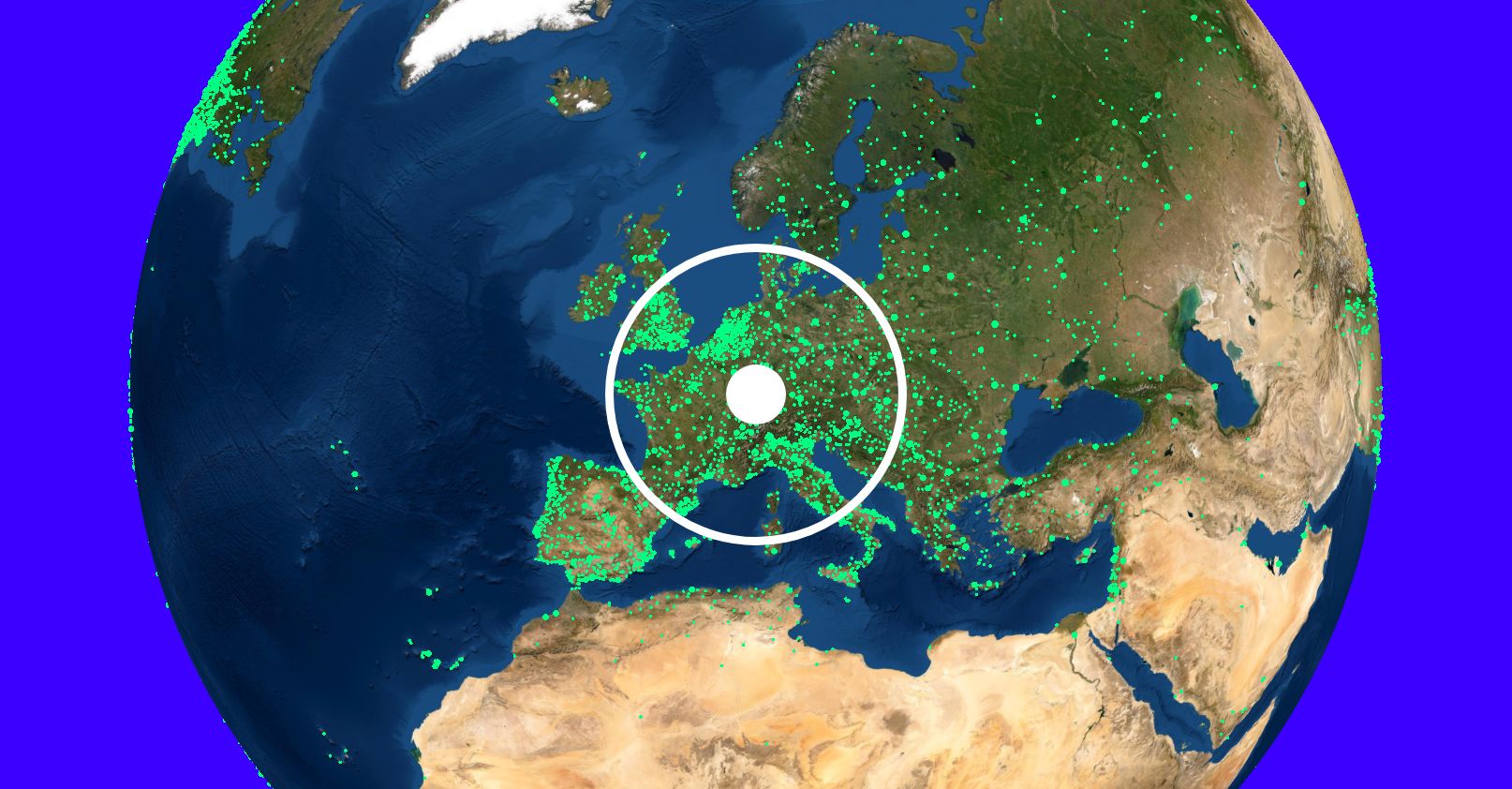
In the last few years, a number of radio stations have shifted gears from shortwave bands to online (digital) platforms. Gradually the erstwhile popular shortwave bands (13m-60m) lost their charm! The only stations which remained dominant, intensifying their coverage were from China (P.R). And as the Chinese stations stepped up their broadcast coverage across the length and breadth of the shortwave radio spectrum, SWLs (in particular) gradually lost interest in shortwave radio. Now, I might sound a bit off-topic - I was surprised to note many serious DXers and SWLs (among my hobbyist friends) started exploring amateur radio. Some of them eventually taking it seriously, becoming HAMs in the process. Those who could afford the insanely costly top-of-the-class SDRs (Software Defined Radios) like Perseus upgraded their listening shacks while those with lesser means shifted to less-costly SDRs (check this list). A third faction - the indecisive ones (or more suitably, I would call them 'experimenters') started fidgeting with web-based SDRs (free-to-use) and mobile radio apps - the likes of utwente, kiwisdr, hamsphere and radio garden! I belong to the experimenters tribe! And Web-SDRs became my new-found passion!

pic courtesy: uTwente

One key reason was my indomitable urge to explore new stations on the air-waves! While my local listening conditions grew bad to worse with ear-deafening radio field interference from the ever-increasing mobile towers and electronic gadgets, web-based SDRs offered a never-before opportunity for tuning  remote receivers stationed half-way across the world with the click of a mouse! For example, the charm of tuning into a low-powered South American station remotely using a communications receiver (fitted to an elaborate antenna system) stationed in Europe and listening to their midnight closing broadcast from the previous day while its early afternoon at my QTH, seemed fantasy-come-true!

pic courtesy: radio garden

Till date, uTwente Web-SDR has remained my favorite! Apart from tuning in to new stations from far-off lands, this Wide-band WebSDR has allowed me unfiltered access to the local medium wave and shortwave, clandestine, and pirate stations (operating on low power) from all across Europe! 

I gradually took interest in pirate stations operating with home-brewed gears and broadcasting sporadically with just a few watts! My daily DX schedule would include monitoring pirate forums for new entrants, preparing and updating listening logs and targeting my next catches to QSL! With much planning and synchronized monitoring I listened to few pirate and free radio stations and amassed a few notable pirate QSLs from Europe to my collection.

pic courtesy - Penguin India

DX pundits might say that E-QSLs obtained by listening to/and reporting on broadcasts heard using remote WebSDRs are not genuine feats. But I will reason otherwise! Any QSL/E-QSL received through truthful reporting of reception (broadcast programs) heard on the radio or through online/ remote radio receivers (WebSDRs) require equal attentiveness and dedication. And if 'transparency' or 'truthfulness' in reporting be considered a yardstick for ingenuity, I would further infer that I was unfortunate to bear testimony to 'unbelievable' DX-feats from seasoned DX hobbyists in the past, those achieved through falsifying reports and doctored audio-clippings, which were even celebrated and cheered on by comrades of the DX fraternity! 

Currently I am not an active DXer and only tune-in my radios rarely. Today, i'm (more-or-less) a regular on web-SDRs and online radio apps.

The days of shortwave listening for nights together, hunting for those elusive radio signals are gone for sure, yet my love for the crackling in the ether remains ever anew!


Wednesday, June 1, 2016

Radio Orion 2000 QSL - Free Radio Station on Shortwave

One of my new-found DX addiction is listening to radio broadcasts via web based Software Defined Radios (WebSDRs). For those of us who entered this magical world of DXing by manually turning the knobs of analog radios, SDRs are nothing short of Aladdin's Magic Lamp! I remember the first time when I actually operated an SDR during ADXL DXpedition 2014, I was simply awestruck! The ease of tuning along with the real-time feed of the station signals appearing in waterfall view on the SDR user interface screen mesmerized my senses! Online (Web-based) SDRs are even more thrilling! The sheer excitement of operating a WebSDR located thousands of kilometers away, right from the comfort of my home and listening to low powered radio stations that are practically impossible to hear from my QTH was something unimaginable even a few years back. 

Now SDRs are just a click away! Hence, once I started tuning SDRs I never got tired, and the thrill continues. Nowadays, (almost every other day) I tune into pirate radio and free radio stations operating with very low power in Europe via WebSDRs located in different countries of Europe. I love the variety of programming, the music, the 'accented' presentation, the local commercials and the colorful QSLs/ eQSLs of these free radio stations. Puritans might say that QSLing a radio station using WebSDR isn't fit to be counted among laurels. I agree, but then WebSDRs provide refreshment to my ever-hungry DX soul, enabling me to relish slices of exotic entertainment, in our present era of dwindling 'powerhouse' broadcasters. 

Radio Orion 2000 logged via Twente SDR


With the onset of A16 broadcast season a plethora of (low powered) pirates/ free radio stations seemed to have emerged in Europe and I have been listening to a lot of these stations every weekend. My recent log of Radio Orion 2000 was quite by chance! I followed up the live blog of a fellow radio aficionado and tuned in to Radio Orion 2000's broadcast on 6940 KHz between 1720-1735 UTC ON April 29, 2016 via Twente WebSDR. A musical program was heard with both German and English songs being played. Prominent IDs in German “Radyo Orion Zweitausend” and in English was heard. Reception quality was overall Average to Fair. Reception suffered from noise (probably QRM from electrical gadget / power source at remote receiver QTH) vicinity. Except this QRM audio stream was flawless with NO breakups in audio feed. A reception report was mailed on May 2nd and eQSL verification was received on May 3rd from Commander Cliff Allister McLane of Radio Orion 2000. Their contact email id is <radioorion2000@gmail.com> .

Monday, May 9, 2016

HCJB Deutschland in Weenermoor Germany Verified!

In early March, I have received a package from HCJB Deutsch – Neuesleben (New Life) in Germany. Inside was a view card, station material (promotional), ‘donate us’ form, the gospel of Luke, HCJB newsletter for January 2016 and most importantly a QSL Verification Letter addressed to me and signed by Mark-Thorsten Wardein (Editor in Chief) of HCJB Deutsch – Neuesleben. The QSL verified my reception report of their broadcast dated 12 Dec 2015 on 3995 KHz from Weenermoor heard via Twente SDR.


HCJB Deutschland transmission from Weenermoor started from June 2012 and this was the first occasion that I happened to QSL this station. Besides producing a German (Neuesleben) and Spanish radio program (Radio Amigos), they give their programs to 40 FM stations in Germany, Latin-America, Spain and USA. 

Here’s a link to an article on HCJB Weenermoor with glimpses of the transmitter centre and antennas (by the way it’s written in German!) Click HERE

For details about the station visit these websites > neusleben.de and hcjb.de

Wednesday, April 27, 2016

Marconi Radio International - Full Data Electronic QSL Verification

Marconi Radio International (MRI) broadcasting from Italy was heard broadcasting on 7790 KHz in USB mode with just 100 watts power on 2nd April, 2016, between 1445 -1500 UTC via remote SDR in Rimini, Italy. Location of listening was my QTH Kolkata, India. The Program Host was heard talking in Italian on various topics. DX related information was shared with listeners. MX (music) was heard in the background. A listener based in Potomac in Maryland, USA was mentioned in the show. 

A DX reception report was read out with “SINPO uno quarto tre quarto uno” or SINPO 14341. At 1458 UTC Station ID in Italian followed by Station announcement in English “This is Marconi Radio International…” by Male (OM) announcer. A reception report was mailed to marconiradiointernational@gmail.com on the next day. A full data Electronic QSL Verification from Marconi Radio International (MRI) was received on April 25, 2016 along with ‘History of MRI’ & ‘MRI Newsletter’ PDFs.

Marconi Radio International QSL


Here’s a synopsis of verification email received from Marconi Radio International (MRI) -

“Thank you for your reception report about one of the first transmissions of Marconi Radio International on 7 MHz carried over a new transmitter capable of tuning between 3 and 30 MHz Our full data electronic QSL verification is enclosed. We are a small free radio station broadcasting from the Italy which, after 15 years of dormancy, returned back to the airwaves on 15 August 2015. MRI began its short wave transmissions on 4 January 1986 and this year celebrated its 30th anniversary. Until a few weeks ago our test broadcasts were aired on our historic frequency of 11390 kHz with a power in the region of 30 watts. On 21 March 2016 a new transmitter was added and, for the first time in our history, a test was made outside the 11 MHz band. We used the frequency of 7700 kHz (USB mode) which gave good reception in Europe. The station was also heard in Newfoundland (Canada). As from 3 May 2016 MRI will start a regular service  on Wednesdays, from 18 hrs to 19 hrs UTC, 20 hrs to 21 hrs UTC, and 22 hrs to 23 hrs UTC on 7690 kHz USB mode  (alternative frequencies: 7700 and 7790 kHz) with a power of 100 watts. Additional broadcasts may also be aired during week-end. When this occurs a circular message with details about days, times and frequencies of these transmissions will be sent in advance to short-wave community and listeners in our mailing list…We hope to extend the duration of our broadcasts in the near future and also to increase power. We also plan to send in printed QSL cards by snail-mail but only to some lucky listeners. That’s why it’s vital to let us have your postal (street or P.O. box) address. Unlike a number of free radios from Northern of Europe we know what a QSL is and our verifications will always come with all details about reception of MRI. 

Last but not least, we need your help! If you use social networks, please post an announcement on Facebook about MRI.  You can also forward this message to a friend. This should help increase our potential audience. We would be glad to hear from you again.Yours sincerely, Marconi Radio International (MRI).”


Thursday, September 17, 2015

Hobart Radio International Verified

Hobart Radio International is a shortwave community service relayed across Europe, North America, South America and New Zealand and features the DX Extra and The Buzz shows! They are known as ‘The Voice for Tasmania’ among DXers and radio listeners the world over. They refer themselves as a radio station that’s “crossing the borders since 2004, telling the unknown and investigating on what's important.”  

I logged Hobart Radio International for the first time on 25.07.2015 (July 25, 2015) on 6070 kHz (via Channel 292) at 16:00 UTC - 16:30 UTC from my home in Kolkata, India via WebSDR at Univ of Twente, the Nederlands. I liked the unique mix of music, talk, comedy and DX news in their weekly show ‘The Buzz’. Reception report with audio clip of the recording was mailed to hriradio@gmail.com on Aug 01, 2015.


Rob Wise from Hobart Radio International replied with a full data eQSL on Aug 08, 2015 appreciating the effort and inviting me to listen to future shows and write to him again. The ‘DX Extra’ Show “which is about the shortwave and radio hobby featuring news, reviews, pirate radio and anything in-between” which airs from Hobart Radio International is one of the last remaining DX shows on the airwaves. I personally like their format and content. To know more about the station or to listen to their archived programs online visit: http://www.hriradio.org

Sunday, May 24, 2015

Pirate and Free Radio QSLs from Europe

Listening to Pirate and Free Radios is very popular among European and North American listeners & hobbyists. However, sitting here in the eastern part of the Indian subcontinent, it is next to impossible to hear these broadcasts. The chief roadblocks are – low powered transmitters (mostly a few wattage of power) and  the broadcast timings (mostly early mornings and late afternoons CET & GMT) which is mid-day to early evening in this part of the world, hence unfavourable day-time propagation on the SW band plays havoc. To add to the tough luck, my QTH is in the busiest part of the city and full of QRM (human-generated interference) from use of everyday electronic gadgets. So it leaves me with no choice but to log and monitor Pirate and Free Radio stations from Europe and North America through remote receivers over an internet connection. The WebSDR at University of Twente, in particular, is my wonder toy! I spend hours listening to Pirate and Free Radio stations operating from the Adriatic to the British Isles and even across the pond from the Appalachians to the Rockies and beyond.

I am amazed to find so much interest in Pirate and Free Radios among listeners at a time when international broadcasters are closing their doors for shortwave radio listeners and dismantling historic transmitting facilities citing lame reasons like lack of funds, lack of listeners, policy change, evolving to a digital only presence and so on. I am into DXing for over 18 years now and I like to enjoy my hobby in all its shades. Having said that I must also confess that nothing beats the sheer charm of slowly turning the tuning knob of radios and adjusting the fine tune/ BW filter to hear voices from across the seven seas! Notwithstanding, Web-SDRs and remote receiver logs are equally fascinating to me. 

With the intention to explore the world of Free Radios and Pirate Radios, I started sending e-reports of my monitoring of Pirate and Free Radio broadcasts since early 2015. I was fascinated to receive my first WebSDR* logged QSL from Radio Geronimo. Then one QSL followed another - Radio Quadzilla, Europa 24, Radio Underground, Radio Merlin InternationalAtlantic 2000 Internationall, and a few more are in the queue.


Radio Geronimo Shortwave QSL, Germany
Quadzilla Radio QSL, East Holland

Europa 24 QSL, Germany

Atlantic 2000 International QSL, Germany

Radio Underground QSL, England

Radio Merlin International QSL, England

Radio Merlin International QSL, England


         Radio Carrierwave QSL, The Nederlands

I must add here that although these are QSLs received after monitoring hours of radio broadcasts (with a Wide Band WebSDR) I would personally consider these as my souvenirs for general listenership. When it comes to ‘real’ QSL hunting and collecting I prefer to remain old school. In the coming months I will keep on adding exotic pirate & free radio mementos to my collection here and will share with you from time to time. Stay connected. 73's

Tuesday, March 3, 2015

Exploring Pirate and Free Radio Broadcasts

Lately, I have taken interest in listening to Pirate Radio Stations. Unlike in the western hemisphere here in India, there isn't any notable pirate station to speak of. Sporadic broadcasts from makeshift/ mobile units can be heard in isolated parts of the country (which are illegal). In this connection I would like to recall my experience of logging and hearing pirate stations operating in the AM/ MW band during my recent trip to nearby sea beaches  - Mandarmani, Udaypur & Tajpur. You can listen to one of my recordings on SoundCloud

Pirate/ Free Radio is Hip & Happening in other parts of the world, especially, in Europe & the United States of America. There's a rich history of free radio broadcasts out there on the web for you to learn and explore. Here's a link for self education - Click HERE


Although, my journey with Pirates/ Free Radio broadcasts started a few years back when I religiously started listenig to Radio Atlantic 2000 International's weekend broadcasts online, but honestly speaking I didn't get the same pleasure of tuning a station, as with web streaming. Till today, I make it a point to listen to Atlantic 2000 Intl. program whenever they broadcasts through their website. Take a look at one of my earlier posts on Atlantic 2000 International To listen online, Click HERE

Only recently, I have started logging Pirate Stations from Europe using Global Tuners & WebSDR. Both are simple to operate yet amazingly accurate and effective for DXing. The sheer thrill of tuning a radio kept thousands of miles away from my QTH and logging the local AM/FM/Utility/Amateur broadcasts audible from the remote QTH, as well as scanning the SW bands to listen to /compare stations' signal propagation with that heard from my location, is sheer fantasy! I am loving it.

Here are my latest QSLs from Pirate/ Free Radio Stations broadcasting from Europe *logged via Global Tuners and WebSDR. Click on the radio station names below to view the QSLs and reception details - 


By the way, in the last two weekends I have logged and listened to a number of Pirates from Europe and only these two stations have responded to my report so far. I will update as soon as I have more good news to share.

73's