Showing posts with label SWLing. Show all posts

Thursday, May 7, 2026

When Your QSL Cards Find a Home in a Global Museum


For every DXer and SWL, a QSL card is never just a confirmation card!

It is proof of patience.
Proof of persistence.
Proof that somewhere across continents, oceans, antennas, static, fading, and noise, a signal travelled through the ether and reached your receiver.

Recently, I experienced a deeply satisfying moment in my DXing journey when a few of my cherished QSL cards were added to the renowned SWL QSL Museum curated by veteran SWL Bill McDavitt.


A Hobby That Started in the 90s

My journey into shortwave listening began during my high school days around 1997. Like many DXers of that era, I was fascinated by the mystery of distant voices emerging from a simple radio receiver.

Back then, DXing was not just a hobby. It was exploration.

Every evening meant tuning across bands, carefully rotating the tuning knob, identifying faint station IDs, battling interference, and waiting for that magical station announcement from another country.

The excitement of hearing a new station was only half the reward.

The other half arrived weeks, sometimes months, later in the mailbox: the QSL card.

Over the years, I collected numerous QSLs from broadcasters, pirate stations, special event stations, and international broadcasters. Some of my DXing experiences were documented on my blogs:

Like many old-school hobbyists, life eventually became busier, and regular DXing sessions became less frequent. My blogs too became occasional archives rather than regularly updated journals.

But the passion for radio never truly disappears.

Reaching Out to the SWL QSL Museum

A few days ago, I decided to write to Bill McDavitt, curator of the SWL QSL Museum, with a simple request: whether some of my QSL cards could be considered for inclusion in the museum’s online archive.

To my delight, Bill responded warmly and added four of my QSLs to the museum:

For many people, this may seem like a small thing.

But for a DXer, seeing your QSL cards preserved in a worldwide archive feels incredibly special. These cards are fragments of radio history. Many stations have already disappeared from the bands, while others exist only online today.

Yet the memories remain alive through these confirmations.

Why QSL Cards Still Matter

In today’s world of instant streaming and digital communication, some may wonder why QSL cards continue to hold such emotional value.

The answer is simple: QSL cards represent human connection through radio.

Unlike modern digital communication, shortwave listening involved uncertainty and discovery. You never fully knew what you might hear when tuning the dial late at night.

A signal from Europe.
A clandestine broadcaster.
A relay station from the Pacific.
A pirate station operating for a few hours.

Every verified reception report carried effort and dedication.

And when a station acknowledged your report with a QSL card, it created a lasting memory.

Preserving the Legacy of DXing

Projects like the SWL QSL Museum play an important role in preserving the heritage of international broadcasting and DX culture.

As more traditional broadcasters leave shortwave, these archives become historical records of an era when radio connected the world in a uniquely magical way.

I’m grateful to Bill McDavitt for maintaining this remarkable archive and for including my contributions.

I also plan to share more QSL cards from my collection in the coming days.

Perhaps somewhere among those old cards lies another forgotten story from the golden age of DXing.

73 and good DX!
Rajdeep Das

Tuesday, March 28, 2023

A short rambling on the state of DXing in a digital-first world!

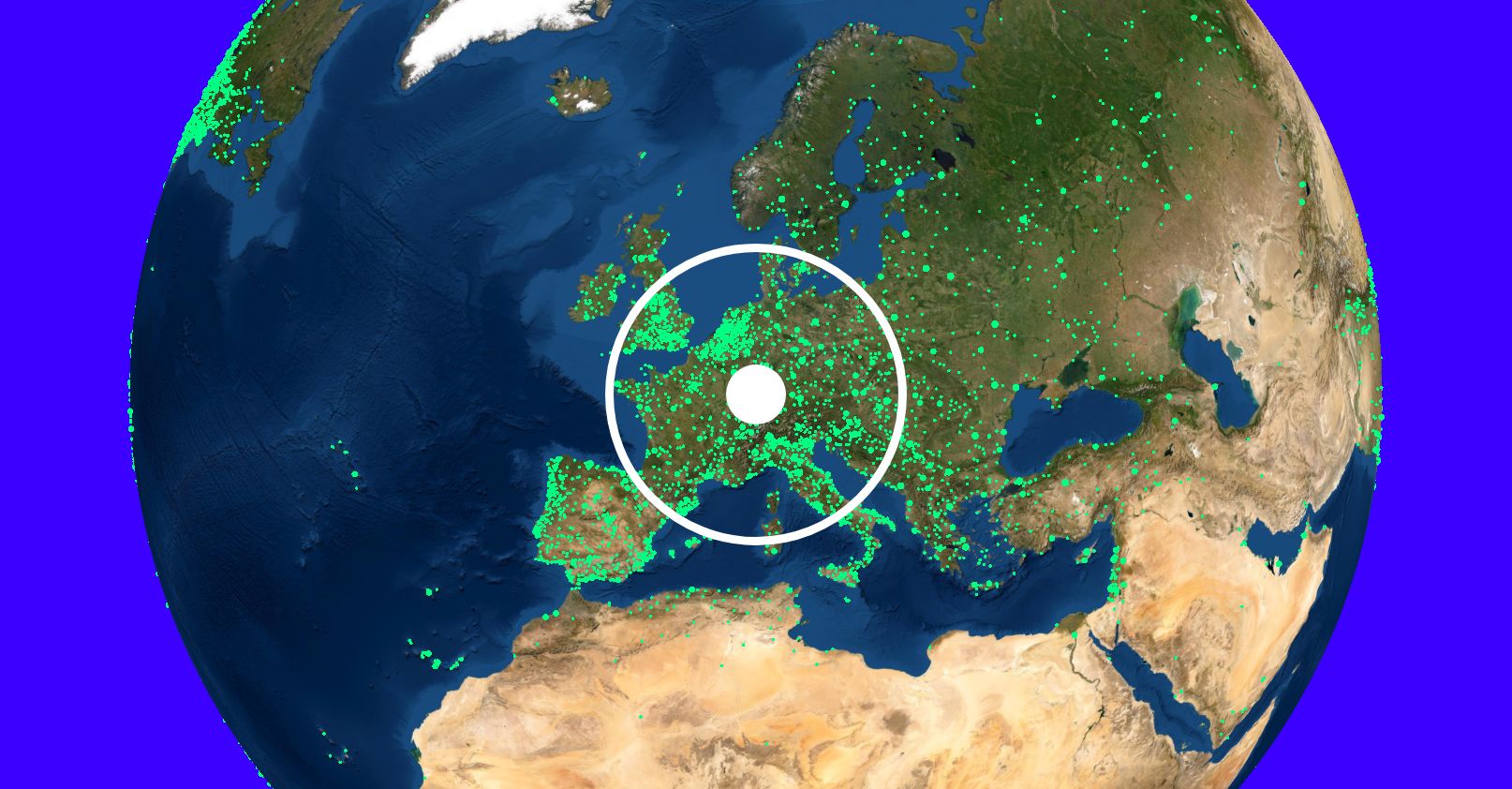
In the last few years, a number of radio stations have shifted gears from shortwave bands to online (digital) platforms. Gradually the erstwhile popular shortwave bands (13m-60m) lost their charm! The only stations which remained dominant, intensifying their coverage were from China (P.R). And as the Chinese stations stepped up their broadcast coverage across the length and breadth of the shortwave radio spectrum, SWLs (in particular) gradually lost interest in shortwave radio. Now, I might sound a bit off-topic - I was surprised to note many serious DXers and SWLs (among my hobbyist friends) started exploring amateur radio. Some of them eventually taking it seriously, becoming HAMs in the process. Those who could afford the insanely costly top-of-the-class SDRs (Software Defined Radios) like Perseus upgraded their listening shacks while those with lesser means shifted to less-costly SDRs (check this list). A third faction - the indecisive ones (or more suitably, I would call them 'experimenters') started fidgeting with web-based SDRs (free-to-use) and mobile radio apps - the likes of utwente, kiwisdr, hamsphere and radio garden! I belong to the experimenters tribe! And Web-SDRs became my new-found passion!

pic courtesy: uTwente

One key reason was my indomitable urge to explore new stations on the air-waves! While my local listening conditions grew bad to worse with ear-deafening radio field interference from the ever-increasing mobile towers and electronic gadgets, web-based SDRs offered a never-before opportunity for tuning  remote receivers stationed half-way across the world with the click of a mouse! For example, the charm of tuning into a low-powered South American station remotely using a communications receiver (fitted to an elaborate antenna system) stationed in Europe and listening to their midnight closing broadcast from the previous day while its early afternoon at my QTH, seemed fantasy-come-true!

pic courtesy: radio garden

Till date, uTwente Web-SDR has remained my favorite! Apart from tuning in to new stations from far-off lands, this Wide-band WebSDR has allowed me unfiltered access to the local medium wave and shortwave, clandestine, and pirate stations (operating on low power) from all across Europe! 

I gradually took interest in pirate stations operating with home-brewed gears and broadcasting sporadically with just a few watts! My daily DX schedule would include monitoring pirate forums for new entrants, preparing and updating listening logs and targeting my next catches to QSL! With much planning and synchronized monitoring I listened to few pirate and free radio stations and amassed a few notable pirate QSLs from Europe to my collection.

pic courtesy - Penguin India

DX pundits might say that E-QSLs obtained by listening to/and reporting on broadcasts heard using remote WebSDRs are not genuine feats. But I will reason otherwise! Any QSL/E-QSL received through truthful reporting of reception (broadcast programs) heard on the radio or through online/ remote radio receivers (WebSDRs) require equal attentiveness and dedication. And if 'transparency' or 'truthfulness' in reporting be considered a yardstick for ingenuity, I would further infer that I was unfortunate to bear testimony to 'unbelievable' DX-feats from seasoned DX hobbyists in the past, those achieved through falsifying reports and doctored audio-clippings, which were even celebrated and cheered on by comrades of the DX fraternity! 

Currently I am not an active DXer and only tune-in my radios rarely. Today, i'm (more-or-less) a regular on web-SDRs and online radio apps.

The days of shortwave listening for nights together, hunting for those elusive radio signals are gone for sure, yet my love for the crackling in the ether remains ever anew!